


The northern part of Le Marche and Montefeltro has been inhabited since ancient times by peoples who settled in central Italy: Etruscans, Picenes and Gauls. An archaeological site has been discovered in the area near the city of Pesaro which indicates the presence of a local population (probably Picenes) between the eighth and the fourth century BC. The museum of Pesaro contains many finds from the tombs, including weapons and jewellery that display excellent workmanship.
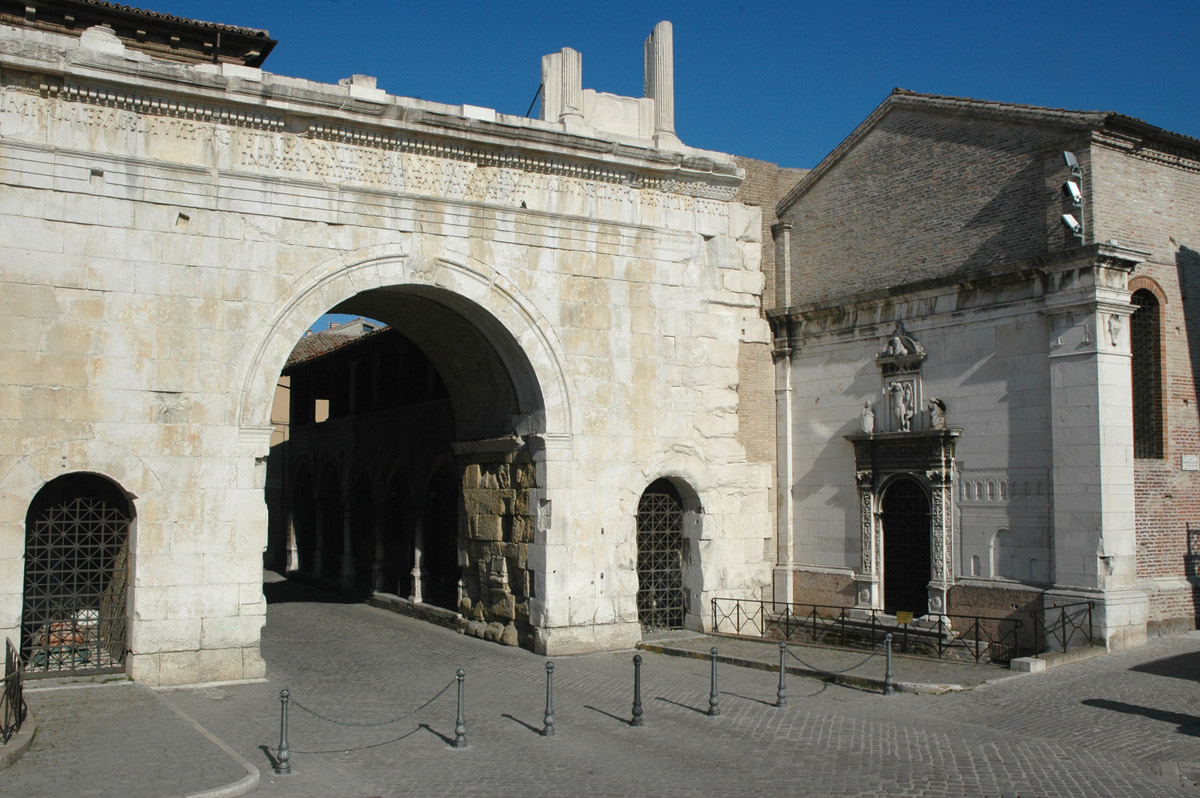
The Roman conquest of the area led to the foundation of the first cities of which the most important was undoubtedly Fano, lying on the via Flaminia that linked Rome to northern Italy and the Roman provinces beyond the Alps. Large sections of the walls built by the emperor Augustus (first century AD) are still visible as is the lower part of the imposing gateway (known as “The Arch of Augustus”) faced in white marble. The cities of Pesaro, Senigallia and Urbino as well as other smaller towns were built on ancient Roman settlements. Throughout the area, there are traces of Roman stone bridges and parts of the original paving of via Flaminia, an important consular road. There are several sites where it is possible to see the interesting mosaics of Roman villas or public buildings. The ancient city of Suasa, which was abandoned in the sixth century AD, preserves many traces of Roman buildings, including the ruins of villas and the amphitheatre. The medieval churches have Roman architectural features (typical of the Romanesque style), such as pilasters and architraves, which have been reused as building material.
After the fall of the Roman empire, the area was beset by wars and invaded by occupying armies, partly due to the important road that led to Rome. The few surviving traces of this period include abbeys and magnificent mosaics.
Medieval churches, towers and towns have remained intact until the present day, reflecting the continuity of settlement in the area. This period was also marked by the construction of the first hilltop settlements which provided greater security for local inhabitants from raids by soldiers and brigands than the valley floor where the old Roman roads still provided access.
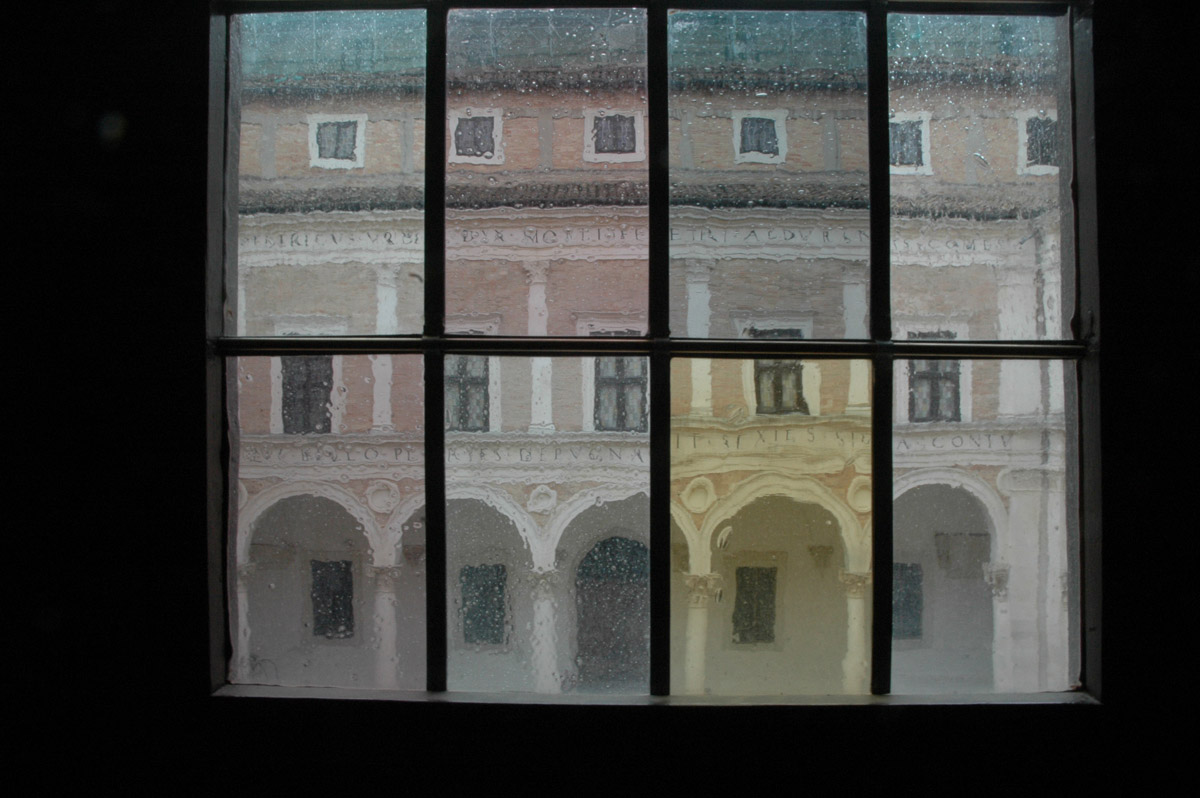
During the fourteenth and fifteenth centuries, the towns and cities fell under the power of local feudal families: the Malatesta family in Fano, the Sforza family in Pesaro, the Montefeltro family in Urbino, and the Malatesta family and later the Della Rovere family in Senigallia. During the late Medieval period and the Renaissance, the feudal lords were under the authority of the Church but still had a wide degree of autonomy. They were essentially mercenary leaders who provided troops to the leading powers of the period and used the payments for men and arms to decorate their palaces and cities. The ducal palace of Urbino, designed by the architect Laurana in the fifteenth century, is renowned worldwide as an extraordinary work of architecture due to its harmonious layout and rationally arranged interior. It is rightfully considered one of the defining examples of Italian Renaissance architecture. During the seventeenth century, with the end of the dukedom of the Della Rovere family which had ruled a large part of the area, the northern part of Le Marche once more fell under the direct control of the Church until 1861 when, together with other Italian regions, it became part of the Kingdom of Italy.
During the period between the two world wars, the coastal cities were influenced by the style of Art Nouveau (known as “Liberty” in Italy), as reflected by several small villas of the period as well as the general form of urban expansion. Simultaneously, there was an increase in seaside tourism which developed enormously after the Second World War. It is interesting to look out for copies of the “Liberty” posters of the period which portray the carefree atmosphere of holidays by the sea.
The Second World War left its scars on various cities such as Pesaro but they underwent rapid reconstruction during the post-war period. The widespread development of small-scale manufacturing, with firms specialising mainly in the furniture and furnishing sector, ensured a fairly high standard of living in the area which, during some periods, was considered a shining beacon of local entrepreneurial flair. At the same time, considerable attention was focused on the environment and the preservation of the landscape and countryside. The planning of Pesaro and neighbouring municipalities has been regarded as a model for Italian town planning and has also been studied by foreign academics.